Dreaming of a horse-friendly acreage near the Rockies but not sure what truly matters on the ground? You are not alone. Equestrian properties around Cochrane look beautiful at first glance, yet Alberta’s foothills climate and local rules make certain features essential for safety, comfort, and long-term value. In this guide, you will learn the must-haves for land, water, barns, fencing, arenas, and permitting so you can buy with confidence and plan with clarity. Let’s dive in.
Why Cochrane is different
Cochrane sits in Alberta’s foothills where winters are cold, snowfall is variable, and chinook-driven freeze–thaw cycles are common. These conditions shape pasture health, arena usability, and mud management. Wind exposure also affects barn orientation and dust control.
Parcels can fall inside the Town of Cochrane or in nearby rural areas like Rocky View County. Zoning, permitted uses, and building approvals differ by municipality. Before you assume what is allowed, verify the local authority for animal counts, commercial uses such as boarding or lessons, setbacks, and development permits.
Environmental risk is another local factor. Parts of the area drain into the Bow River system, so floodplain proximity can impact insurability and usable land. Properties near treed foothills should plan for wildfire mitigation. Water sources vary by parcel, from wells to cisterns to dugouts, and reliability is not uniform.
Land and layout essentials
Usable acreage and topography
Start with usable acreage that fits your goals. Smaller hobby parcels can work for one or two horses with careful management. More horses require proportionally more space for safe turnout and pasture rotation. Favor gently sloped ground for natural drainage. Steep slopes reduce usable pasture and make arena construction more complex.
Soil type matters. Well-draining soils reduce mud, protect hoof health, and help pastures thrive. If soils are heavy or prone to pooling, plan engineered drainage and designated sacrifice areas to preserve grass.
Access and trailer movement
Good access is non-negotiable. Look for all-weather roads, a wide turning radius, and trailer parking that does not block everyday vehicle movement. Confirm year-round access for hay deliveries, veterinarians, and farriers. In winter, consider how snow removal will keep routes safe.
Water: supply, quality, and winter
Sources and capacity
A reliable, year-round water source is essential. Local properties may use wells, rural water connections, or dugouts. Ask about historical production, seasonal performance, and the setup for distributing water to paddocks and barns. Capacity considerations extend to pasture irrigation or supplemental watering during dry spells.
Testing and safety
Request recent well water tests for bacteria and nitrates and review well logs and pump details. Horses are sensitive to certain contaminants, so quality matters as much as quantity. If surface water is involved, confirm safety measures around dugouts or ponds, including fencing and controlled access.
Winterization
Alberta winters require freeze protection. Look for insulated lines, heated waterers, or frost-protected delivery systems. Evaluate where troughs sit relative to power, wind, and snow drifting, and plan for safe footing around water points.
Barns and stables that work in Alberta
Safe stall design and ventilation
Quality barns share a few basics: appropriately sized stalls, secure latches, and non-slip flooring. Ventilation is critical. You want consistent air exchange without drafts to minimize respiratory issues while keeping temperatures manageable in winter.
Support spaces that save time
A well-laid-out barn includes a tack room, feed room, and wash bay, plus separate hay storage to reduce fire risk and moisture issues. Rodent- and moisture-resistant storage protects your investment in feed and bedding and simplifies daily routines.
Fire and electrical safety
Confirm construction quality, roofing, and electrical systems designed for barn use. Heated elements and arena lighting require adequate service and permitted wiring. Fire safety improves with clean separation of combustible storage, proper outlets, and plans for early detection.
Feed, fencing, and turnout
Hay and bedding storage
You will need dry, vermin-resistant storage sized for off-season supplies. Proximity to the barn matters for efficient chores while maintaining safe separation from stalls and tack.
Fencing that protects horses
Choose horse-safe fencing such as wood board, vinyl board, high-tensile with a protective top board, or woven wire with a visible top. Avoid barbed wire in horse areas. Inspect for secure fastenings, proper heights, and safe, easy-to-use gates.
Paddock layout and mud control
Design paddocks with sacrifice areas to protect grass during wet seasons and winter. Cross-fencing supports rotation and reduces overgrazing. Use gravel or geotextile in high-traffic zones like gates and waterers. Provide shelter in each paddock for comfort in wind, snow, and summer sun.
Arenas and schooling facilities
Outdoor arenas
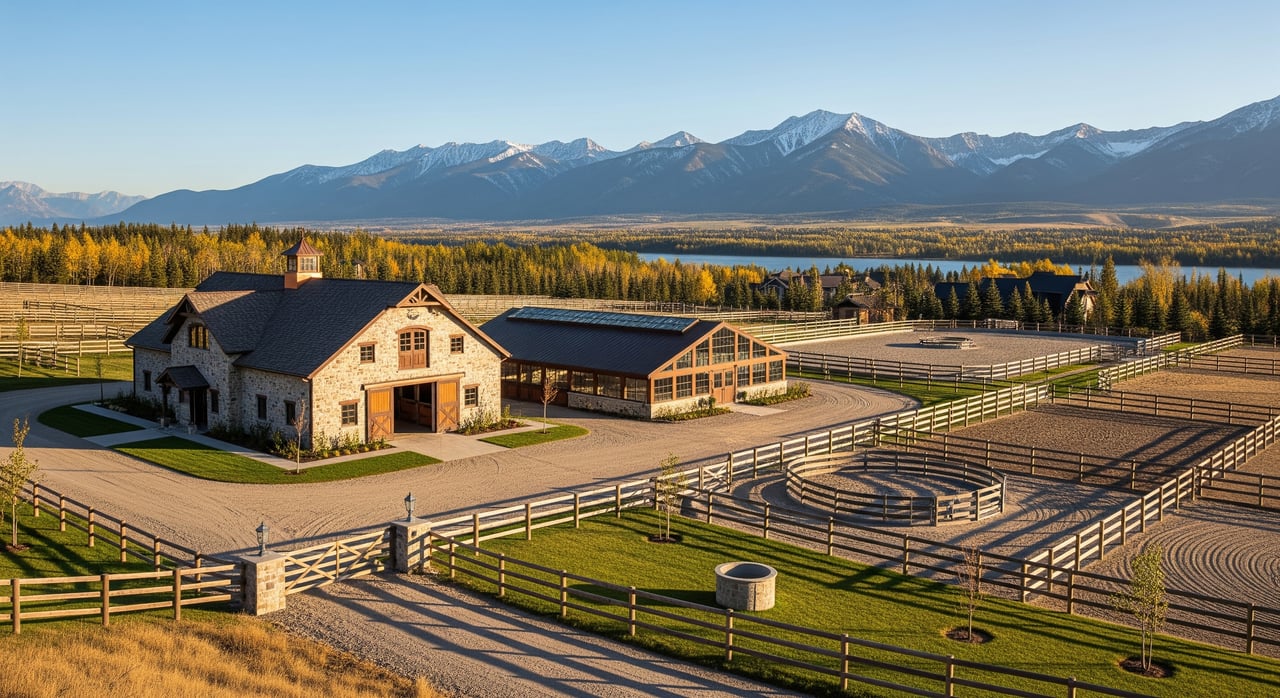
A safe arena begins with base preparation and drainage suited to local soil and weather. Surfaces often use sand or sand blends that balance cushion and grip. Orient arenas with wind and sun in mind to reduce dust and glare. Size depends on your discipline, from smaller schooling rings to larger competition dimensions.
Indoor considerations
Indoor arenas extend your riding season in Alberta’s climate. They require a higher upfront investment and ongoing operating costs. Look for structure quality, lighting, ventilation, and snow load considerations. If building later, confirm permitting requirements and siting options before you commit.
Handling infrastructure
Round pens, lunging areas, safe loading zones, and handling lanes make routine care and training more efficient. Plan clear sightlines and non-slip footing where horses are asked to stand and move.
Utilities, septic, and waste
Power and heat
Verify electrical capacity for barn lighting, heated waterers, and any planned arena lighting. Tack rooms and wash bays benefit from reliable heat and hot water. Consider energy sources such as electricity, propane, or natural gas, and how the site supports equipment placement and refills.
Septic and wash bays
Acreages typically rely on private septic systems. High-use barns or wash bays can increase wastewater volume. Request septic design documents and approvals so your usage aligns with system capacity and local standards.
Manure management
Plan a manure management strategy that fits municipal and provincial rules. Options include on-site composting, hauling, or land application. You will need space for storage and a plan to control runoff and odors.
Legal and due diligence
Zoning and permits
First, confirm whether the property is in the Town of Cochrane or a rural municipality such as Rocky View County. Each has its own land-use bylaws that govern animal counts, commercial boarding or lesson operations, setbacks, and development permits. Ask about any restrictive covenants, caveats, or easements that could limit equestrian uses or future building.
Water licences and wells
If a dugout, pond, or surface diversion is part of the water system, certain uses may require provincial approvals or licences. Request well permits, well logs, and recent water quality tests. Verify the legal status of any surface water diversions.
Inspections and specialists
Engage professionals early. Consider a structural inspection for barns and outbuildings, an electrical safety review, a septic inspection, and fencing and pasture assessments. A land survey can clarify property lines and any easements. For performance-focused buyers, consult local equine professionals on stall flooring, arena construction, and footing.
Documents to request
- Building and development permits and inspection certificates for barns, arenas, and outbuildings.
- Recent well tests, well log, and pump specifications.
- Septic permits, maintenance records, and as-built plans.
- Pasture management records, including rotation and seeding.
- Maintenance logs for fencing, barns, and arenas.
- Insurance claims history related to structures, if available.
Value-add upgrades for resale
Thoughtful upgrades improve daily use and increase marketability:
- Barn quality and ventilation with insulated tack and feed rooms, and stalls sized to your program.
- All-weather arena with proper base and drainage, or an indoor for year-round training.
- Improved turnout with solid fencing, cross-fencing, shelters, and well-designed sacrifice areas.
- Documented compliance with permits, inspections, and professional work that reduces buyer uncertainty and speeds closings.
A smart buying plan for Cochrane
Use this simple plan to move from shortlist to secure purchase:
- Define your program. Number of horses, riding goals, and whether you plan any commercial activity such as lessons or boarding.
- Filter by land and water. Prioritize usable acreage, drainage, and a reliable year-round water source with winterization.
- Confirm zoning. Verify the municipality, permitted uses, animal counts, and permit triggers for planned improvements.
- Inspect systems. Evaluate barns, electrical, septic, fencing, and arenas with qualified professionals.
- Stress-test for winter. Review access, snow management, heated waterers, and safe footing plans.
- Validate documents. Collect permits, inspections, well and septic records, and any surface water licences.
- Plan your first-year improvements. Budget for fencing repairs, mud control, shelters, or arena work that will protect your horses and your investment.
If you are weighing two great properties, choose the one with better drainage, documented compliance, and a reliable water system. Those features protect day-to-day use, animal health, and resale value.
Ready to tour equestrian-ready acreages or discuss a tailored acquisition plan? Our boutique team pairs local acreage expertise with architect- and development-informed guidance to help you evaluate sites with clarity. Reach out to Bearspaw Real Estate to Request a Luxury Tour.
FAQs
How many acres do I need for a few horses in Cochrane?
- Smaller parcels can work for one or two horses with intensive management, but more horses require proportionally more space for rotation, turnout, and buffer areas.
Can I run a small boarding or lesson operation on my acreage?
- It depends on municipal zoning and permits; confirm whether the property is in the Town of Cochrane or a rural municipality and check land-use bylaws for commercial uses.
What should I evaluate about water before buying?
- Confirm a reliable year-round source, request recent well tests and logs, review pump capacity and freeze protection, and verify approvals for any surface water use.
What fencing types are safest for horse paddocks?
- Consider wood or vinyl board, high-tensile with a protective top board, or woven wire with a visible top, and avoid barbed wire in horse areas.
Do I need permits to build an indoor arena near Cochrane?
- Most larger structures trigger development and building permits, and requirements vary by municipality; verify local rules and setbacks before planning an indoor.